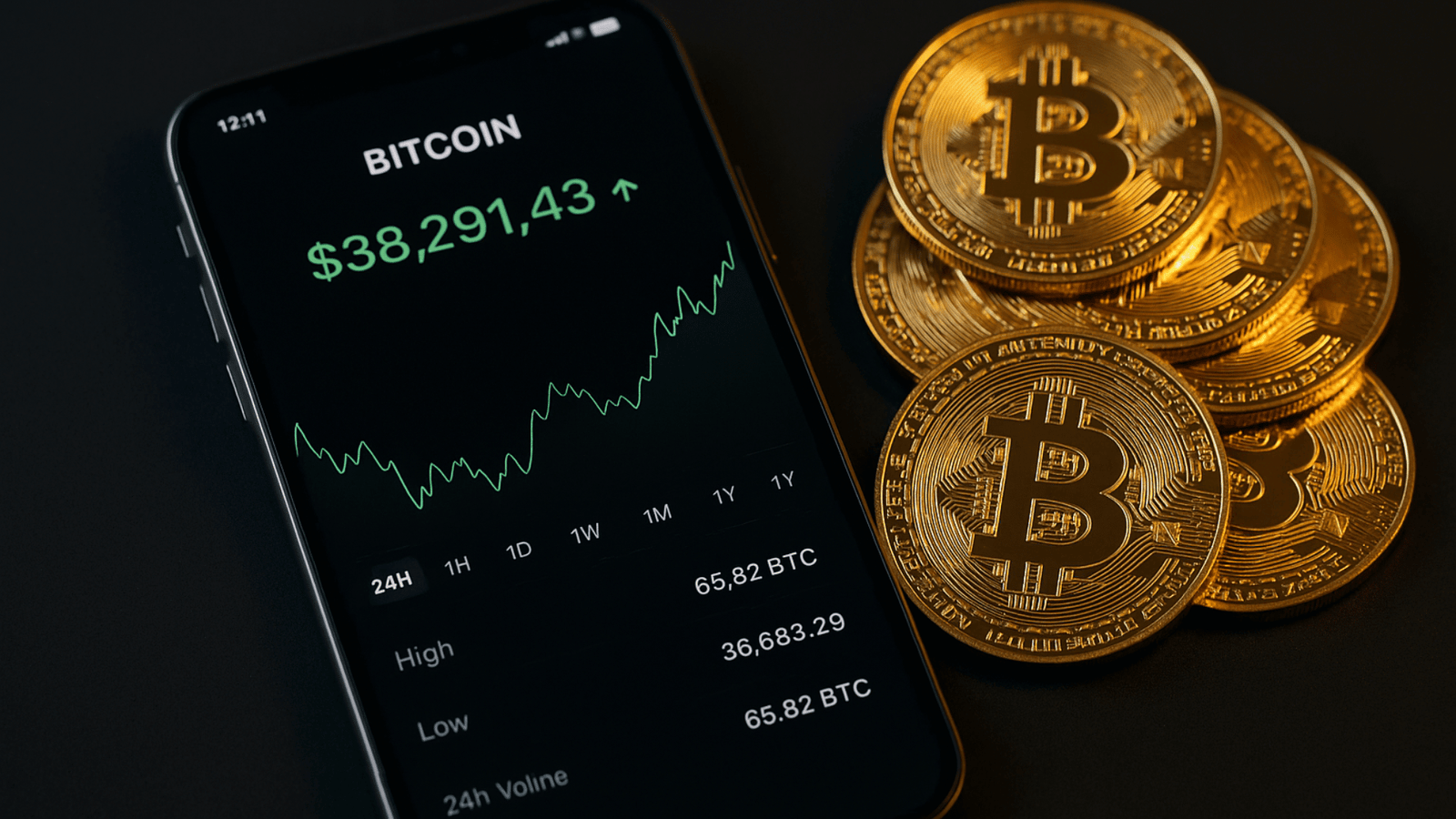


In today’s fast-moving financial world, change can happen in the blink of an eye. Markets rise and fall, policies shift, and new ideas constantly reshape the way people think about money and technology. Each update carries ripple effects that reach investors, businesses, and everyday individuals trying to make sense of what it all means. That’s why staying informed isn’t just helpful it’s essential. By looking closely at the latest developments, we gain a clearer picture of the opportunities, challenges, and stories shaping the future of global finance.
1) UK–US announce new body to streamline cross-border capital markets access and deepen crypto cooperation
In a move that signals growing policy coordination across the Atlantic, the UK Treasury said Britain and the United States will set up a new body aimed at reducing red tape for firms seeking to access one another’s capital markets and, crucially for crypto, to “improve cooperation on crypto assets.” On the surface this looks like a technical market-plumbing initiative, but it’s more than that: it’s about lowering the friction for listings, fundraising and cross-border participation, while giving digital-asset companies clearer lines of sight into how rules will be interpreted on both sides. For crypto builders and institutional allocators, the win is predictability fewer conflicting interpretations and less duplicative compliance when dealing with two of the world’s deepest capital markets. The timing matters: after a year of record spot-ETF inflows, major listings, and improving (if still patchy) oversight, authorities appear to be moving from reactive supervision to proactive frameworks that can scale. This new body won’t write all the rules, but it can accelerate harmonization on disclosures, custody, market-abuse surveillance, and stablecoin treatment — the areas that keep lawyers and risk teams up at night. If they get it right, we could see faster approvals for cross-listed vehicles and an easier path for crypto infrastructure firms to tap public markets. For founders, it reduces the “pick a jurisdiction and hope” problem; for investors, it trims regulatory arbitrage and encourages better standards. The announcement also complements today’s broader narrative: global regulators increasingly prefer cooperative playbooks over fragmented rules that chase capital away. In short, this is not a headline-grabbing ban or a one-off enforcement shot it’s plumbing. But plumbing is what turns pilot projects into real-world markets. Watch how quickly working groups translate this into shared guidance on tokenization, custody capital charges, and reporting standards. If momentum holds, Q4 and early 2026 could feature smoother passporting for digital-asset products and more consistent treatment of risk across the UK and US a catalyst for both institutional adoption and healthier market structure.
Source: Reuters
2) China reportedly tells some brokers to pause RWA tokenization pilots in Hong Kong (risk-control push)
An exclusive report says China’s securities regulator has advised certain mainland brokerages to temporarily pause their real-world asset (RWA) tokenization activities in Hong Kong, citing risk-control considerations. Practically, that means pilots where assets like funds, commodities, or invoices are wrapped as on-chain tokens could be slowed while supervisors reassess operational risk, investor suitability, and the cross-border compliance model. For context: Hong Kong has positioned itself as Asia’s regulated crypto hub, actively licensing exchanges and encouraging tokenization particularly of traditional assets to modernize capital markets. But with scale comes risk. In any RWA program you have oracle design, asset custody, legal title, bankruptcy remoteness, and KYC/AML architecture each a potential failure point. Beijing’s nudge suggests authorities want implementation to tighten before the playbook goes wider. This doesn’t read like a repudiation of tokenization (Mainland policy documents continue to promote “blockchain+” for real-economy use cases); instead it’s a classic “measure twice, cut once.” Expect reviews of who may participate (institutional vs. retail), how valuations are maintained, disclosure standards, and how redemption and dispute resolution work when off-chain realities collide with on-chain claims. The near-term effect: slower RWA headlines from HK brokers and a flight to quality among tokenization providers with stronger legal structuring and audit trails. The medium-term effect could be positive if the pause yields clearer guidance and safer architectures. For projects, now is the time to double down on governance, attestations, and issuer transparency; for investors, the signal is clear treat “RWA” as a regulated financial product, not just a token with a narrative. If and when pilots resume under tighter rules, the segment will be healthier and more investable.
Source: Reuters
3) Market wrap: Bitcoin slides toward ~$112K amid a broader risk-off, with heavy long liquidations
After flirting with recent highs, Bitcoin’s momentum faded and prices slumped toward the ~$112K handle, dragging majors and many altcoins with it. Analysts flagged a cluster of long liquidations (north of a billion dollars over 24 hours) as leveraged traders were forced out, compounding the move. Importantly, this wasn’t a “single headline” dump; rather, it was the kind of broad deleveraging you get when the bid thins and macro tailwinds (like dovish-Fed optimism) take a breather. Technically, BTC breaking below short-term moving averages invited systematic selling, while derivatives metrics hinted at a market that had become too one-sided: funding leveled out, basis compressed, and spot order books looked patchier than last week. Ethereum magnified the beta a familiar pattern with ETH underperforming on a percentage basis as traders rotated into cash and a handful of stronger large-caps. The question now is whether this is “cycle exhaustion” or just another garden-variety shakeout in a year of higher highs. Bulls will point to sticky ETF inflows, improving regulatory clarity, and strong corporate treasuries as a floor. Bears will note that summer’s exuberance left pockets of excess leverage, and that macro (PCE data and Fed speak) can still upset risk. For active traders, the playbook is straightforward: respect the trend until strength reclaims key levels; watch open interest and liquidation heatmaps for reflex bounces; and monitor ETF net flows as a proxy for real demand. For longer-term allocators, nothing here changes the structural story but it does argue for patient entries and keeping powder dry when perp markets run hot. In short, this looks like a healthy, if uncomfortable, reset rather than a thesis break.
Source: Cointelegraph
4) Corporate/treasury shake-up: Strive moves to acquire Semler Scientific, aiming to merge “Bitcoin treasuries” strategies
A notable corporate finance story with a crypto twist: asset-manager Strive agreed to acquire Semler Scientific in a deal framed as a merger of companies known for holding Bitcoin on balance sheet. Shares reacted in opposite directions Semler popped initially while Strive slipped reflecting both deal arithmetic and investor debate over the value of corporate “BTC treasuries” as a strategy. The big picture: ever since MicroStrategy reopened the playbook, a long tail of public companies experimented with adding Bitcoin as a treasury reserve, boosting equity multiples in bull phases but amplifying drawdowns when BTC retraces. This deal is an attempt to consolidate that thesis, potentially gaining scale in capital markets access, liquidity management, and governance around digital-asset exposure. If the combined entity can secure cheaper financing (convertible notes, at-the-market equity programs, or structured debt against BTC holdings) and manage risk more professionally (hedges around event risk, conservative collateral ratios, better custody and insurance), it might convert volatility into a competitive funding advantage. But there are trade-offs: using a corporate equity wrapper to express a BTC view introduces basis risk (equity can underperform BTC at the wrong time), regulatory overhead, and shareholder alignment challenges. For crypto markets, the signal is twofold. First, treasury adoption hasn’t gone away; it’s professionalizing via M&A rather than one-off balance-sheet announcements. Second, equity investors are getting choosier they’ll reward companies that can articulate why BTC exposure enhances the core business, not just the share price. Expect more scrutiny of risk management, board oversight, and disclosures (including how impairment and fair-value accounting are handled during drawdowns). As deals like this close, watch whether the combined entity targets additional BTC accumulation, divestitures at cycle highs, or diversification into staking income and tokenized-asset yields. That strategic posture will tell you whether “corporate BTC” is evolving into a durable treasury craft or retreating to a bull-market artifact.
Source: Bloomberg
5) Research note: Deutsche Bank projects Bitcoin may sit alongside gold on central-bank balance sheets by 2030
Deutsche Bank floated a provocative and for many, bullish idea: by 2030, Bitcoin could appear on central-bank balance sheets alongside gold as a complementary reserve asset. The thesis isn’t that BTC replaces gold, but that it could carve out a small, diversifying slice as more institutions acknowledge its liquidity, portability, and non-sovereign nature. The path from here to there runs through a few milestones: continued maturation of spot ETF markets (tight spreads, deep liquidity), robust custody and settlement rails that meet central-bank grade standards, clearer legal treatment (especially around collateral eligibility and accounting), and a macro regime where non-correlated hedges are prized. Skeptics will counter that volatility remains high, policy acceptance is uneven across jurisdictions, and political cycles can swing hot-cold on crypto with little warning. Both are true which is why the note frames adoption as “alongside” gold rather than supplanting it. For investors, the practical takeaway is about scenario analysis: reserve adoption doesn’t need to be universal to be price-relevant; even small allocations by a handful of emerging-market central banks would be symbolically powerful and mechanically meaningful for float. For builders, it underscores why compliance-first products and bulletproof infrastructure matter; the gatekeepers here are risk committees, not retail momentum. If the industry can keep reducing operational, legal, and market-structure risks and if macro continues to reward scarce, censorship-resistant assets the 2030 vision becomes less speculative. Whether or not one agrees with the timeline, the mere fact that a major bank is publishing the argument shows how far the Overton window has shifted. The next proof points to watch: growth in sovereign wealth fund mandates that explicitly allow BTC, central-bank pilot programs around tokenized reserves, and any trial balloons from small economies with high FX volatility.
Source: CoinDesk
That’s all for now thanks for reading. Keep reading, stay updated, and never stop exploring what’s ahead.